How to Spot a Real Web3 Project in 2026: A Practical Due Diligence Guide
Why Due Diligence Matters More Than Ever
Crypto in 2026 is in a strange place. The infrastructure has matured, regulation is real in most major markets, and serious capital is flowing back in. But the bar to launch a token is still nearly zero, and AI tools have made it trivial for bad actors to spin up convincing landing pages, fake whitepapers, and even synthetic founder interviews. The signal-to-noise ratio is worse than ever, even though the underlying technology is better than ever.
That makes one skill more valuable than any chart pattern or trading strategy: knowing how to evaluate a project before you put a single dollar into it. This guide is the practical framework we use at DapPromo when we decide whether to cover a project at all.
Step 1: Read the Smart Contract Address, Not the Website
The marketing site is the wrapper. The contract is the product. Before reading a single paragraph of marketing, find the official contract address (always cross-check it on at least two sources, never trust a contract link from one Telegram channel) and look up:
Verified source code on Etherscan, BaseScan, TONScan, or the equivalent for the chain. If the contract is not verified, that is a red flag.
Holder distribution - if the top 10 wallets hold more than 40 percent of supply and none of them are a known DEX or treasury, you are looking at a rug waiting to happen.
Liquidity - is the LP locked? For how long? Is it a real lock contract or a screenshot?
Mint and pause functions - can the team mint unlimited tokens? Can they freeze your wallet? These are sometimes legitimate, but you need to know they exist.
Step 2: Check the Team Without Trusting LinkedIn
Anonymous teams are not automatically a scam, plenty of legitimate crypto teams stay anonymous for legal reasons, but a fake team is always a problem. Use these checks:
Reverse-image-search the founder photos. AI-generated faces and stock photos are still common.
Look at the LinkedIn profiles - real ones have connections, recommendations, and 5+ years of post history. Fakes are spun up the week before launch.
Check GitHub. Real engineers leave a trail of commits across multiple projects, not one repo created two weeks ago.
If the team claims partnerships with major brands, verify with the brand directly. The number of fake "as featured in" logos is staggering.
Step 3: Read the Whitepaper Like a Skeptic
A real whitepaper does three things: it explains the problem, the solution, and how the token actually accrues value. If you finish reading and you cannot answer "what does this token do besides go up?" - the answer is nothing.
Specifically watch for:
Vague tokenomics - if the supply schedule, vesting cliffs, and unlock dates are not on one page, the team is hiding something.
Buzzword soup - "AI-powered DeFi GameFi metaverse aggregator" is not a product. It is a Mad Lib.
Roadmaps without dates - "Q1: Phase 1" is not a roadmap. Real teams commit to specific features by specific quarters.
Step 4: Look at Community Behavior, Not Community Size
A 50,000-member Telegram with 30 messages a day is dead. A 5,000-member Telegram with active developer responses to technical questions is alive. Spend 15 minutes scrolling the chat before you trust the project. Things to look for:
Are mods just deleting hard questions, or are the team answering them?
Are the announcements regular, or did they stop two months ago?
Is anyone actually using the product, or is everyone just waiting for the price to pump?
Step 5: Check the On-Chain Activity
Marketing can be faked. On-chain activity cannot. Use a tool like DeBank, Dune, or Nansen to check:
Is the protocol generating real transaction volume, or is it the same five wallets cycling tokens?
Is the TVL growing because of new users, or because the team rugged a partner protocol's liquidity?
Is the dev wallet active? Inactive dev wallets for 60+ days are a leading indicator of abandonment.
Step 6: Search for the Worst Things People Have Said
Twitter, Reddit, and YouTube are full of paid shills. They are also full of people who lost money and want to warn you. Search the project name plus "scam," "rug," or "exit" and read the negative results carefully. Most accusations are noise, but a pattern of independent complaints is a serious warning.
The Bottom Line
You will never eliminate risk in crypto. But 90 percent of the disasters that wipe out retail investors are completely preventable with 30 minutes of basic due diligence. The framework above is not exotic; it is just the work most people skip because the hype feels too good to slow down for. Slowing down is the strategy. The good projects will still be there next week. The scams will not.
Related Articles
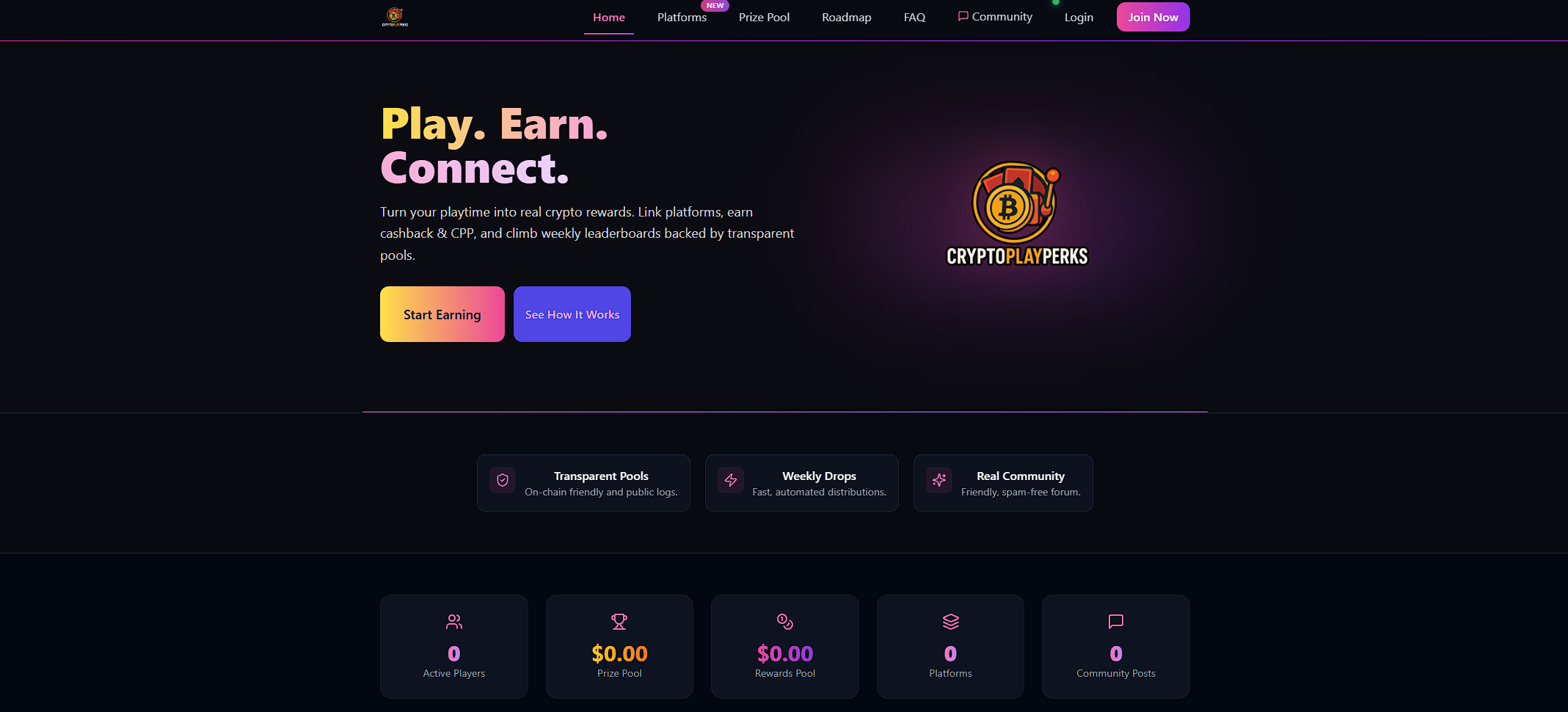
CryptoPlayPerks: A Community-Driven Rewards Hub for Crypto Gamers
CryptoPlayPerks shares affiliate rewards directly with players. Browse curated crypto gaming deals and earn real cash back from your gameplay.
Crypto Gaming and Play-to-Earn in 2026: From Hype Cycle to Real Economy
Play-to-earn died, then quietly rebuilt itself. Here is how crypto gaming evolved into a sustainable model in 2026, which projects survived the reset, and what makes a Web3 game actually worth your time.
Crypto Gambling in 2026: How Blockchain Is Reshaping Online Casinos
From provably fair smart contracts to instant on-chain payouts, blockchain is rewriting the rules of online gambling. Here is what crypto casinos look like in 2026 and what to look for before you play.